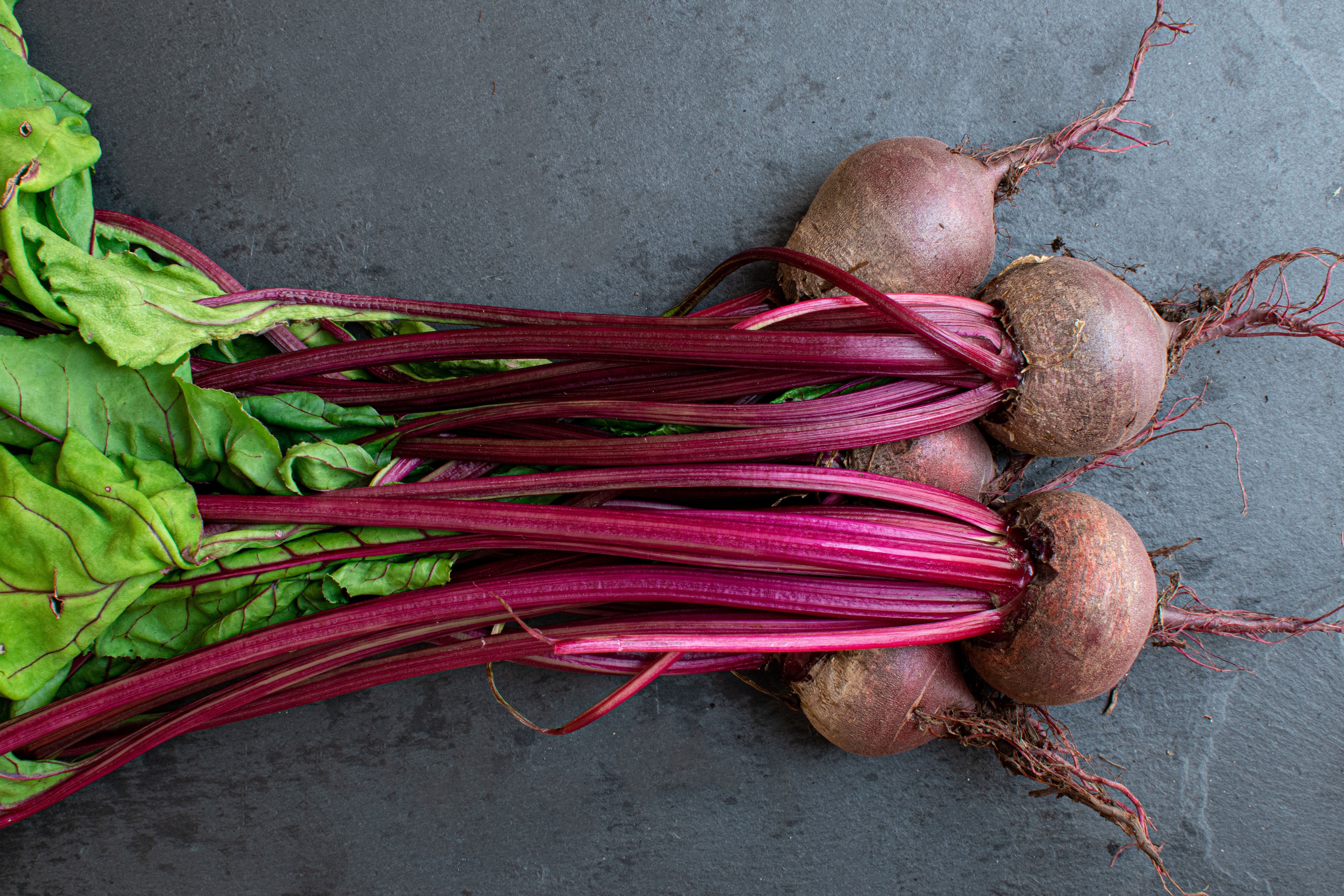
Red beet (*Beta vulgaris* var. *conditiva*) is one of the most widely grown root vegetables in Poland and across Central Europe. It is prized for its deep color, earthy flavor, and rich nutritional profile — including folate, fiber, potassium, and natural pigments with antioxidant properties.
Whether you are growing red beets for fresh consumption in summer salads or for autumn harvest and winter storage, getting the sowing date right is one of the most important decisions of the season. In this article, we cover the optimal sowing windows and the key agrotechnical practices that support a successful red beet crop.
Soil Requirements
Red beets grow best in fertile, humus-rich soils with a stable structure and good moisture retention. The root develops mostly in the top 20–30 cm of soil, so the quality of the topsoil layer is particularly important.
Key soil parameters:
- Soil type — loamy and silty soils with high organic matter content are ideal; very light sandy soils dry out too fast, and heavy clay soils can cause misshapen roots
- pH — 6.0–7.0 (neutral to slightly acidic); red beets are moderately sensitive to acidity, and liming should be applied if the pH falls below 6.0
- Organic matter — incorporating compost or well-rotted manure in autumn improves soil structure and provides a steady supply of nutrients throughout the growing season
- Predecessors — red beets perform well after cereals, legumes, or crops that leave the soil in good structural condition; avoid planting directly after other root crops or beets to minimize disease carryover
Sowing Dates
The optimal sowing date for red beets depends on the intended use of the harvest:
- April to May — sow for early summer harvest and fresh use; these beets will be ready from July onward; choose early-maturing varieties for the best results
- June (up to mid-June) — sow for autumn harvest and winter storage; later sowing produces roots that mature in cooler weather, which promotes better sugar accumulation and storage quality
Red beet seeds germinate at a soil temperature of 8–10 °C, so April sowings should not be made too early — cold, wet soil delays emergence and increases the risk of seedling diseases.
In regions with cooler springs, covering early sowings with agro-textile (fleece) for two to three weeks can accelerate germination and protect young plants from late frost.
Sowing Technique
Red beet "seeds" are actually multi-germ clusters (fruit clusters) that produce several seedlings from a single unit. This means that thinning is an essential step after emergence.
Sowing parameters:
- Sowing depth — 2–3 cm; deeper sowing delays emergence, while too-shallow placement risks drying out in spring
- Row spacing — 25–30 cm, providing enough room for inter-row cultivation and hand weeding
- Thinning — when seedlings reach the 2–3 leaf stage, thin to a spacing of 8–10 cm between plants within the row; this ensures adequate room for root development
For larger-scale production, precision sowing with monogerm seed is available and eliminates the need for thinning. However, for garden and small-field cultivation, multi-germ seed remains common and economical.
After sowing, lightly firm the soil surface to improve seed-to-soil contact — a simple roller pass or the back of a rake works well in small plots.
Care and Watering
Red beets require consistent moisture throughout the growing period for even root development. Irregular watering leads to woody texture, cracking, and uneven sizing.
- Watering frequency — during dry spells, water deeply once or twice a week rather than giving light, frequent sprinklings; aim for 25–30 mm of water per week during the main growth phase
- Mulching — a thin layer of straw or compost between rows helps retain soil moisture, suppresses weeds, and keeps the soil temperature stable
- Weeding — keep the bed weed-free, especially during the first 4–6 weeks when the beet canopy has not yet closed; shallow hoeing between rows is effective and avoids damaging the roots
- Fertilization — if the soil was well-prepared before sowing, a single side-dressing of nitrogen (20–30 kg N/ha or a handful of composted fertilizer per meter of row) at the 4–6 leaf stage is usually sufficient; avoid excessive nitrogen, which promotes leaf growth at the expense of root quality
Harvest Timing
The timing of red beet harvest depends on the sowing date and intended use:
- Early sowings (April–May) — harvest from July to August when roots reach 6–8 cm in diameter; smaller roots are more tender and milder in flavor
- Late sowings (June) — harvest from late September to October, before hard frosts; these roots are denser and store better
Harvesting is best done in dry weather. Gently loosen the soil with a fork, lift the roots, and twist off the tops about 2 cm above the crown — do not cut too close to the root, as this causes bleeding and reduces storage life.
For storage, select only undamaged, disease-free roots and keep them in a cool, humid environment (2–4 °C, 90–95% humidity) — a root cellar, sand-filled crate, or clamp works well. Under proper conditions, red beets can be stored for several months.
Summary
Red beets are best sown from April to June, depending on the intended use. They require fertile, well-drained soil with neutral to slightly acidic pH, and regular watering for even root development.
By choosing the right sowing window, maintaining consistent soil moisture, and harvesting at the appropriate time, you can enjoy fresh, flavorful beets throughout summer and well into winter.
Summary
Red beets are best sown from April to June, depending on the intended use. They require fertile, well-drained soil with neutral to slightly acidic pH, and regular watering for even root development.