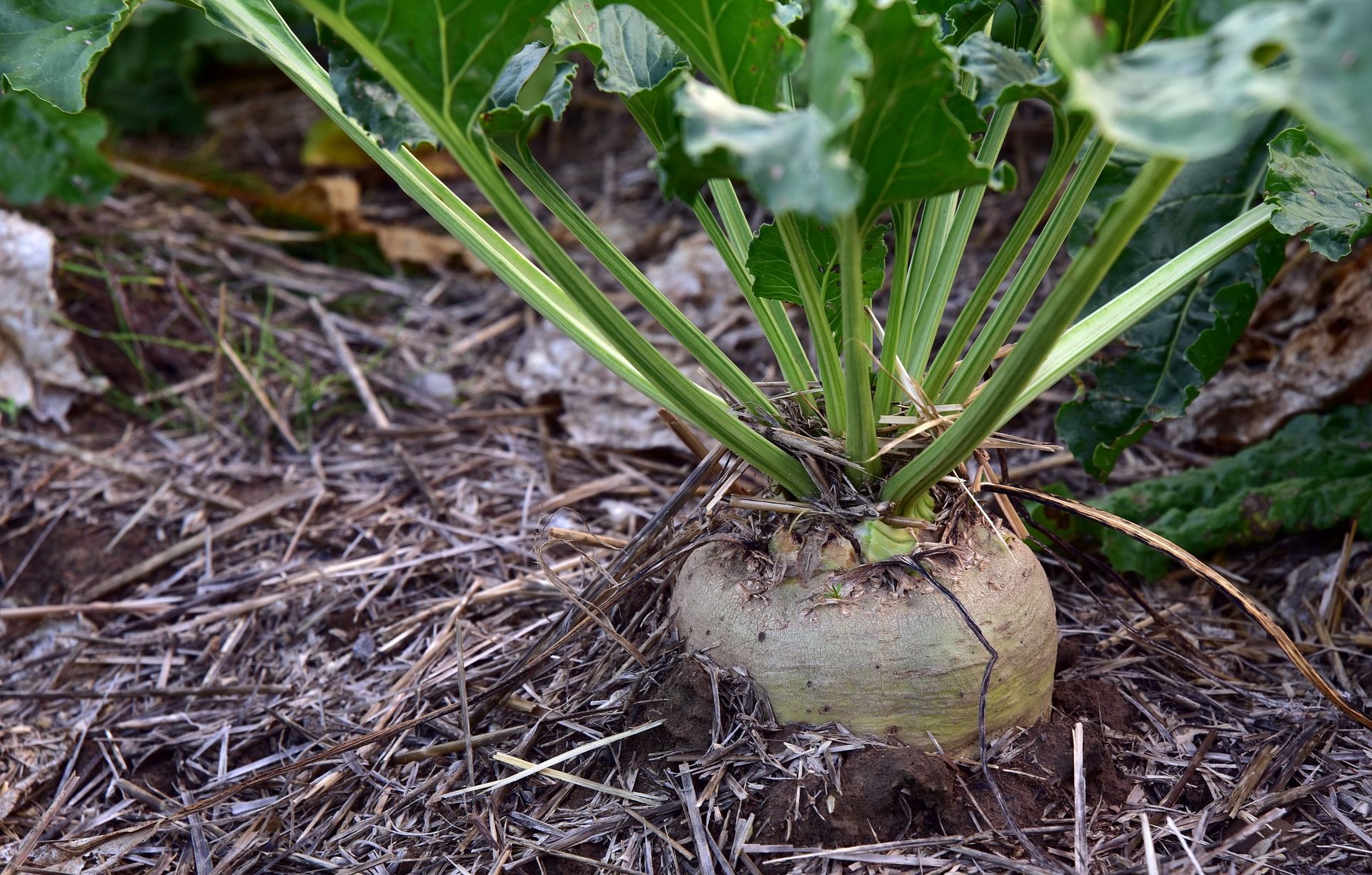
Sugar beet is one of the most economically significant crops in Europe and the primary raw material for domestic sugar production. It is grown on a large scale across Poland and other temperate-climate countries, where it plays a vital role in both agriculture and the food industry.
Achieving high sugar yields requires careful planning from the very start — beginning with soil preparation and extending through precise sowing, balanced fertilization, and effective crop protection. In this article, we focus on the most critical phase: sowing.
Soil Requirements
Sugar beet performs best on deep, fertile soils with good water-holding capacity and a stable structure. The root system can extend over a meter into the ground, so any compacted layers or shallow topsoil will limit yield potential.
Key soil parameters:
- Soil type — medium-heavy loams, silty loams, and chernozem-type soils are ideal; light sandy soils dry out too quickly, while heavy clay soils impede root development
- pH — 6.5–7.5 (neutral to slightly alkaline); sugar beet is more sensitive to acidity than most field crops, and liming may be required on soils below pH 6.5
- Water capacity — adequate moisture availability throughout the growing season is essential, as water stress during summer significantly reduces sugar accumulation
- Soil structure — deep plowing in autumn followed by spring seedbed preparation creates the fine, firm, and level surface needed for precision sowing
Optimal Sowing Dates
Sugar beet sowing in Poland typically takes place from late March to mid-April, depending on regional climate and soil conditions.
The key temperature threshold is a soil temperature of 5–8 °C at sowing depth (2–3 cm). Sowing into cold soil delays germination and exposes seeds to soil-borne pathogens, while waiting too long shortens the growing season and reduces sugar content at harvest.
- Early sowing (late March) — possible in warmer regions with lighter soils that warm up quickly; carries some risk of late frost damage to seedlings
- Optimal window (first two weeks of April) — the best compromise between early canopy closure and frost risk avoidance
- Late sowing (after mid-April) — should be avoided when possible, as each week of delay can reduce sugar yield by 0.5–1.0 t/ha
Pay close attention to the weather forecast and soil moisture conditions in the days leading up to sowing. Sowing into waterlogged soil leads to poor seed-to-soil contact and uneven emergence.
Seed Preparation and Sowing Technique
Modern sugar beet cultivation relies on precision sowing with monogerm, pelleted seed. This ensures even spacing and eliminates the need for manual thinning.
Sowing parameters:
- Spacing between plants in the row — 18–22 cm, targeting a final plant density of approximately 80,000–100,000 plants per hectare
- Row spacing — 45 cm (standard across most of Europe), which allows for mechanical inter-row cultivation
- Sowing depth — 2–3 cm; consistent depth is critical for uniform emergence; precision seeders with depth-control mechanisms are strongly recommended
The seedbed must be fine, firm, and level — clods larger than a few centimeters interfere with seed placement and emergence. A final pass with a seedbed combination (cultivator + crumbler roller) shortly before sowing is standard practice.
After sowing, roll the field lightly to improve seed-to-soil contact, especially in dry conditions.
Fertilization
Sugar beet has high nutrient demands, particularly for potassium and sodium, which play a direct role in sugar accumulation and osmotic regulation within the root.
General fertilization guidelines:
- Nitrogen (N) — 100–150 kg/ha; apply in split doses — part before sowing and part as a top dressing in early growth stages; excessive nitrogen reduces sugar content and increases amino-nitrogen impurities
- Phosphorus (P₂O₅) — 60–90 kg/ha; supports root development and early vigor
- Potassium (K₂O) — 150–200 kg/ha; the most critical nutrient for sugar beet; potassium deficiency causes leaf scorch and significantly lowers sugar percentage
- Sodium (Na) — 30–50 kg/ha; beneficial for sugar beet specifically, as it partially substitutes for potassium in physiological processes
- Boron (B) — 1–2 kg/ha; boron deficiency causes heart rot and crown canker, especially on alkaline soils
Soil analysis before the season is essential to calibrate fertilizer rates accurately and avoid nutrient imbalances that reduce both yield and sugar quality.
Weed Control and Crop Protection
Sugar beet is a slow-starting crop — its canopy takes several weeks to close, leaving the field exposed to intense weed competition during the critical early growth phase.
Weed control strategy typically involves:
- Pre-emergence herbicides — applied shortly after sowing to suppress early weed flushes
- Post-emergence herbicide programs — usually applied in two to three sequential treatments at the cotyledon to 2-leaf stage of emerging weeds
- Mechanical inter-row cultivation — complements chemical control and breaks soil crusts that can hinder beet emergence
Crop protection also includes monitoring for key pests and diseases:
- Cercospora leaf spot — the most damaging foliar disease; fungicide programs are routine in high-risk areas
- Beet cyst nematode (*Heterodera schachtii*) — managed through crop rotation (minimum 3–4 year break) and resistant varieties
- Aphids — can transmit virus yellows, which reduces sugar content; monitor fields from May onward and treat when thresholds are reached
Harvest
Sugar beet harvest in Poland runs from September through November, with the exact timing coordinated with sugar factory delivery schedules.
Sugar content in the roots peaks in late autumn, so delaying harvest (within reason) generally improves sugar yield. However, the crop must be lifted before the onset of hard frosts, which damage the roots and accelerate post-harvest deterioration.
- Root quality — the best roots are clean, undamaged, and free of excessive soil and crown material
- Defoliation and topping — performed mechanically just before or during harvest; proper crown removal is important for sugar extraction efficiency
- Post-harvest storage — keep beet in well-ventilated clamps and deliver to the factory as soon as possible to minimize sugar losses from respiration
Summary
Sugar beet sowing requires careful soil preparation, precise timing in spring, and attention to spacing and depth. Proper fertilization — especially potassium — and effective weed control are essential for achieving high sugar yields.
By adhering to recommended agrotechnical practices at every stage, from seedbed preparation through harvest, growers can optimize both root yield and sugar content, ensuring a profitable crop.
Summary
Sugar beet sowing requires careful soil preparation, precise timing in spring, and attention to spacing and depth. Proper fertilization — especially potassium — and effective weed control are essential for achieving high sugar yields.