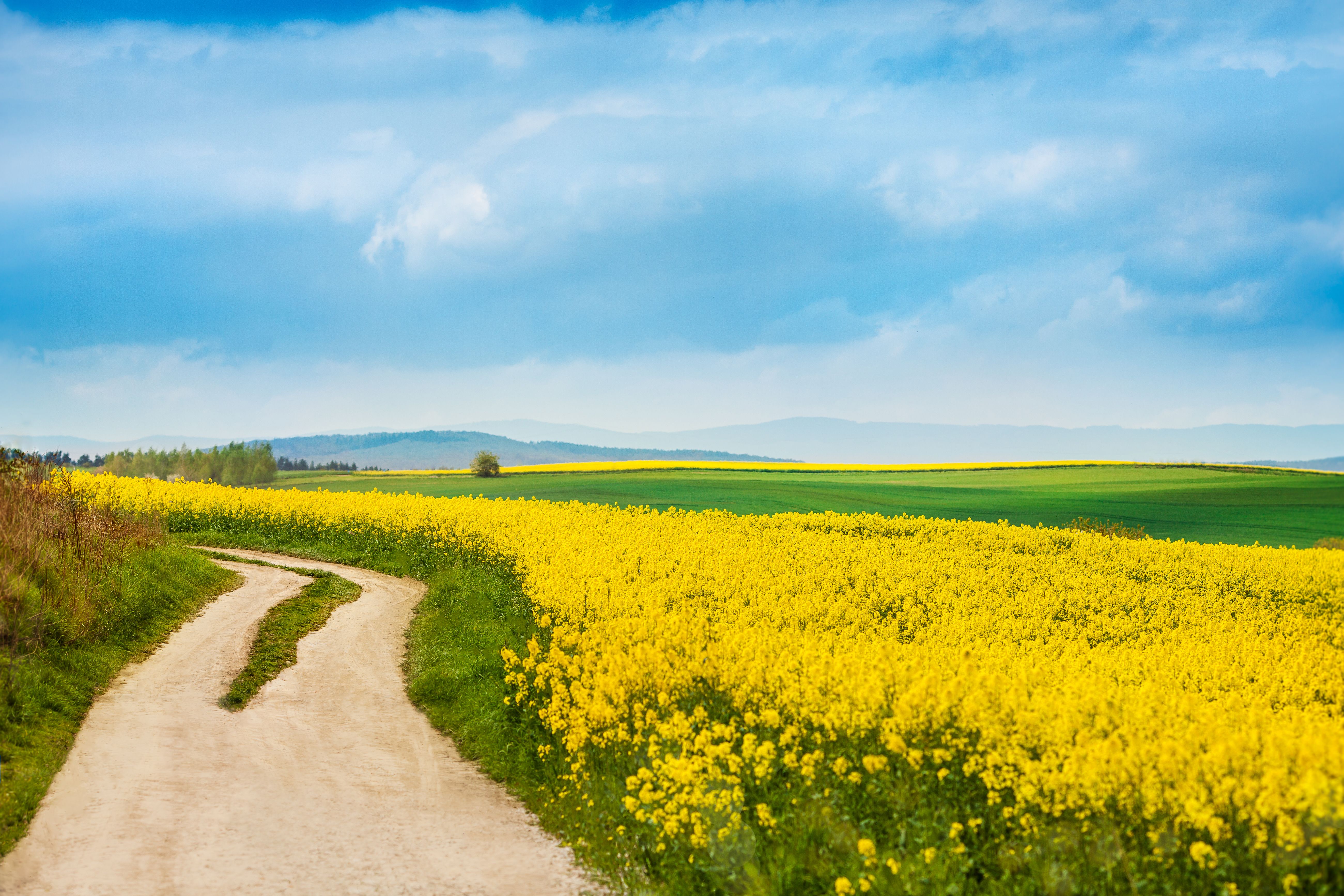
Rapeseed is one of the most important oilseed crops in Poland and across Europe. Its cultivation can be highly profitable, but it demands careful planning and precise execution of field operations. In this guide, we walk through every stage — from choosing the right site to harvesting — so you can get the most out of your rapeseed crop.
Site Requirements
Rapeseed performs best in regions with annual rainfall of 600–700 mm, with adequate moisture especially during germination and flowering. The soil should be fertile, rich in humus, and well-supplied with calcium and nitrogen.
The optimal soil pH is above 6.0 — acidic soils should be limed well in advance of sowing. Heavy clay soils are less suitable, as rapeseed needs good drainage and a loose seedbed for proper root development.
Crop Rotation
Rapeseed must not be sown after itself — a break of at least four years is recommended to reduce disease pressure from pathogens like clubroot and sclerotinia.
The best preceding crops are legume-cereal mixtures and legumes such as:
- Lupine
- Lucerne (alfalfa)
- Peas
- Soybean
- Faba bean
These crops improve soil structure and leave behind valuable residual nitrogen, giving rapeseed a strong start.
Winter Rapeseed — Sowing Guidelines
Winter rapeseed is the dominant form grown in Poland. The target plant density is 35–38 plants per m², and seeds should be placed at a depth of 1.5–2.5 cm to ensure even emergence.
Optimal sowing dates vary by region:
- Northeastern Poland — August 5–10
- Eastern Poland — August 10–15
- Central Poland — August 15–20
- Western Poland — August 20–25
Timely sowing is critical — plants need to develop a rosette of 6–8 leaves before the onset of winter to survive frost.
Spring Rapeseed
Spring rapeseed yields 20–50% less than the winter form, but it serves as a valuable option when autumn sowing fails or as a good preceding crop for other species.
The recommended plant density is higher — 70–80 plants per m² — and sowing takes place in March to April, as soon as soil conditions allow field entry. Spring rapeseed has a shorter growing season and lower oil content, but it can still be economically viable when managed well.
Disease Protection and Fertilization
In spring, rapeseed has high nitrogen demands. A common recommendation is to apply around 100 kg N/ha in the form of ammonium nitrate, split into two doses — the first at the start of vegetation and the second before stem elongation.
Boron plays a particularly important role in rapeseed cultivation. Boron deficiency leads to poor flowering and reduced pod set. Foliar boron applications during the budding stage are strongly recommended.
Regular scouting for diseases such as sclerotinia stem rot, phoma leaf spot, and alternaria is essential, with fungicide treatments applied at the appropriate growth stages.
Hybrid Varieties
Hybrid rapeseed varieties are increasingly popular due to their greater resistance to stress factors and more stable yields across variable conditions.
Recommended hybrid varieties include:
- ES Imperio
- ES Amaretto
- ES Cesario
- ES Capello
Hybrids typically offer stronger root systems, better winter hardiness, and more vigorous spring regrowth compared to population varieties.
Harvest
Rapeseed is harvested in July to August. Average harvest losses can reach 8–9%, so timing and combine settings are critical.
The optimal time to begin harvest is when the canopy turns yellow-green and seed moisture is between 40–55%. Delayed harvest increases the risk of pod shattering, especially in hot, dry conditions.
Using desiccants before harvest can help even out maturity and reduce losses. Proper combine adjustments — particularly drum speed and concave clearance — are essential to minimize seed damage.
Summary
Successful rapeseed cultivation depends on several interconnected factors:
- Timing — sowing within the recommended regional window
- Seeding rate — matched to the variety and soil conditions
- Fertilization — adequate nitrogen and micronutrient supply, especially boron
- Variety selection — hybrids offer greater yield stability
- Soil preparation — proper pH, structure, and preceding crop
- Sowing depth — 1.5–2.5 cm for even emergence
Attention to each of these details significantly improves the chances of a profitable rapeseed harvest.
Summary
Rapeseed cultivation requires careful preparation — from choosing the right site with suitable soil, through proper crop rotation, to disease and pest protection. Hybrid varieties offer greater yield stability, but both winter and spring rapeseed require precise fertilization and timely field operations.